
2001 Hall of Fame Inductees
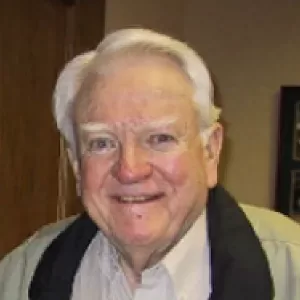
Clarence Scharbauer
Clarence Scharbauer
As owner of five Quarter Horse champions and National Horse Racing Hall of Fame Thoroughbred Alysheba, Scharbauer has left his mark on both Thoroughbred and Quarter Horse racing.
Scharbauer’s family owned 1959 Kentucky Derby (Gr. I) winner Tomy Lee*, and he followed in those footsteps when Alysheba won that historic race in 1987 in the colors of his wife, Dorothy. Alysheba went on to win that year’s Preakness Stakes (Gr. I) and earn an Eclipse Award as the year’s Champion Three-Year-Old Male. The following season, Alysheba won a slew of major stakes, culminating in his victory in the Breeders’ Cup Classic (Gr. I). He was named 1988 Horse of the Year and retired as the world’s richest racehorse.
Scharbauer’s impact on the Texas racing industry goes far beyond the success of his runners on the track.
Scharbauer was a past president of the American Quarter Horse Association (AQHA) and a member of that organization’s Hall of Fame.
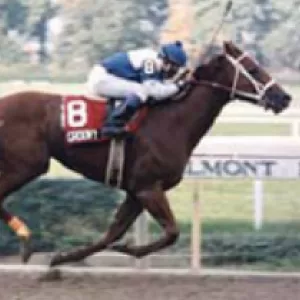
Groovy
Groovy
Texas’ all-time leading earner amoung Thoroughbreds, Groovy was voted an Eclipse Award as the nation’s champion sprinter as a 4-year-old in 1987.
Owned and campaigned by Marshall and Mickey Robinson of Fort Worth, Texas, Groovy’s championship campaign included six triumphs in seven starts. Groovy annexed that season’s Vosburgh Stakes (Gr. I), True North Handicap (Gr. II), Tom Fool Stakes (Gr. II), Forego Handicap (Gr. II), and Roseben Handicap (Gr. II). His only defeat was a second place finish in the Breeders’ Cup Sprint (Gr. I).
Groovy was a multiple Grade One-placed stakes winner at three before blossoming into the nation’s leading sprinter at four.
A son of Norcliffe and the Restless Wind mare Tinnitus, Groovy retired from racing with earnings of $1,346,956.
Groovy had a successful career as a stallion and was pensioned from stud duty at WinStar Farm in Versailles, Kentucky in 2001. As a stallion, he sired four group/graded stakes winners — Grade 1 winner Brutally Frank, Incinerate, Groovy Feeling, and Argentinean Group 3 winner My Swinger.
Brutally Frank, who was Groovy’s leading earner with a bankroll of $634,664 from six seasons on the racetrack. He won three stakes races in 2000, including the Carter Handicap (G1) at Aqueduct.
Incinerate won 14 of 62 career starts, including the 1995 Bed o’ Roses Handicap (G2) at Aqueduct, for $553,556 in earnings.
Groovy also sired 16 stakes-placed runners and has lifetime progeny earnings of over $10.5 million.
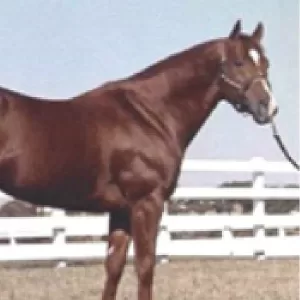
Special Effort
Special Effort
Special Effort is considered by many to be one of the fastest Quarter Horses to ever race.
His record at the track bears that out as he won 13 of 15 races and still holds the distinction of being the only horse to ever win the two-year-old Triple Crown at Ruidoso Downs (All-American, Rainbow, and Kansas Futurities), which he did in 1981. That season, Special Effort was named World Champion, Champion Two-Year-Old and Champion Two-Year-Old Colt.
The following year, Special Effort was named Champion Three-Year-Old Colt after a campaign that included a victory in the Kansas Derby.
The son of Raise Your Glass (TB) and the Double Devil mare Go Effortlessly retired from the racetrack with career earnings of $1,219,948.
As a stallion, Special Effort has been a tremendous success. He is the sire of over 60 stakes winners, 7 champions, and the earners of over $17 million to date. He is the second leading active Quarter Horse sire of all-time by progeny earnings, and he is quickly becoming a leading broodmare sire. He stands at 6666 Ranch in Guthrie, Texas.
Joseph R. Straus, Sr.
Joseph R. Straus, Sr.
Straus’ impact on the Texas racing and breeding industry cannot be measured merely by the success of his horses on the racetrack.
Straus was one of the driving forces in the effort to get pari-mutuel wagering returned to Texas in the 1980s, and his considerable influence and skills have proven an invaluable asset to the Texas racing industry time and again.
Straus, a consummate horseman, has bred and raced a number of graded stakes winners. Among those horses is No Le Hace, the second place finisher behind Riva Ridge in the 1972 Kentucky Derby (Gr. I) and Preakness Stakes (Gr. I).
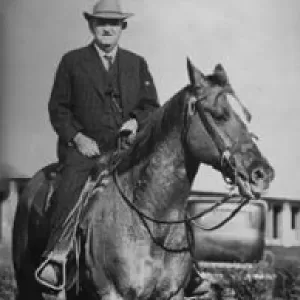
“Colonel” W.T. Waggoner
“Colonel” W.T. Waggoner
A pioneer of the Texas racing industry during the first half of the twentieth century, Col. Waggoner was a rancher, horseman and entrepreneur who chose a spot between Dallas and Fort Worth to build Arlington Downs racetrack.
After using his influence to help pass pari-mutuel legislation in 1933, Waggoner developed Arlington Downs into one of the premier racetracks in the country.
Attendance at Arlington Downs frequently hovered around 25,000 on Saturdays as the track’s purses sometimes exceeded even the purses in New York.
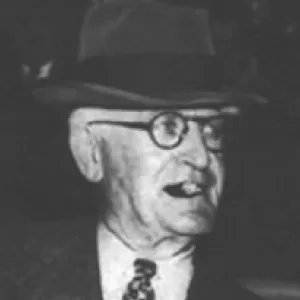
Emerson F. Woodward
Emerson F. Woodward
In the late 1930s and 1940s, Woodward made a big splash on the racing scene, sending more horses to the track than any other man during that time period.
Racing horses at most of the major tracks around the country, Woodward’s top runners included 1940 Champion Two-Year-Old Filly and 1941 Kentucky Oaks winner Valdina Myth, 1942 Kentucky Derby third place finisher Valdina Orphan, and Rounder.
Rounder, imported from Europe by Woodward, became the only horse to ever outrun 1941 Triple Crown winner and Horse of the Year Whirlaway in wire-to-wire fashion.
Woodward prepared his horses to go to the various tracks at his own Valdina Farms, which straddled Uvalde and Median Counties. He had his own training barns, stables, stud paddock, jockeys and trainers.
Unfortunately, Woodward and his wife, Bessie A. McGarry, were killed as the result of a train/car accident near D’Hanis, Texas in May of 1943.