
2017 Hall of Fame Inductees
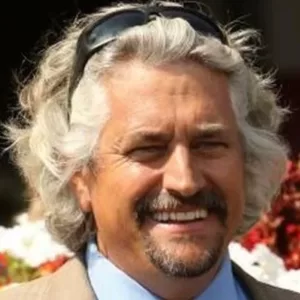
Steve Asmussen
Steve Asmussen
Born on November 18, 1965 in Gettysburg, South Dakota and raised in Laredo Texas at the family farm.
Steven Mark Asmussen has continued his family’s legacy in the horse racing industry in a big way. His father and mother, Keith and Marilyn, are both horse trainers and heavily involved in the industry in Texas. Asmussen made his entrance into the racing industry as a jockey at the age of 16 competing at tracks in New Mexico, California, and New York. He rode for 3 years ringing up 63 wins in the saddle. In 1986 Steve Asmussen began his training career with thoroughbreds as well as quarter horses in New Mexico. By 2002 Asmussen was the leading trainer with 407 wins which could only be topped by his record breaking 555 wins in 2004. For the 2008 season Asmussen received the Eclipse Award for Outstanding Trainer and set the single season record with 622 wins. As a trainer, Asmussen is currently credited with $257 Million in lifetime earnings. Steve Asmussen is currently ranked 4th by earnings and 2nd by wins for the 2017 year. He and his family’s contributions to Texas horse racing have enriched the sport and set the bar high for future trainers in the state.
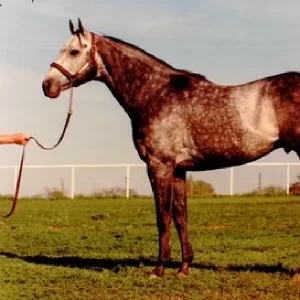
Creole Dancer
Creole Dancer
Creole Dancer was a tribute to all of the small breeders in the racing industry, the ‘little guys”, who didn’t have the resources to play the game at the highest level.
His mother was claimed at the Meadowlands in New Jersey for $6,500 in the fall of 1981. She broke down in that race, requiring surgery prior to the van ride to Texas. At the New Bolton Center, a Florida equine surgeon, Dr. Stephen Selway, performed an arthroscopic procedure, for which he was one of the pioneers in North America.
After shipping to Texas, E. Cee Miss was bred to a son of Native Dancer, Dancing Dervish, in the spring of 1982. The stallion stood in North Texas for a fee of $2,500.
E. Cee Miss foaled a grey colt, Creole Dancer in the following spring, 1983. That was the beginning of almost a fairytale racing career that impacted all of his connections.
In his two-year old year, he won 3 races at Louisiana Downs, including the $150,000 Friendship Stakes and was named Champion Two Year Old of the meet.
The next year was a heart breaker. He required 3 surgeries for bone chips, which cost him his entire three year old season.
At the age of 4, in 1987, he came roaring back to the races, winning an allowance race at Oaklawn Park, followed by a win in the Carousel Handicap, setting a stakes record of 108.3, which still stands. He then shipped to Omaha, Nebraska, where he won the Ak-Sar-Ben Handicap, defeating 9 stakes winners, several of which were winners of graded stakes.
In the spring of 1988, before retiring to stud duty, he won the Gold Cup Stakes at Delta Downs, ending a racing career in which he earned almost $250,000. He went on to a sucessful stallion breeding career at Alamo Stud Farm, in Lytle, Texas.
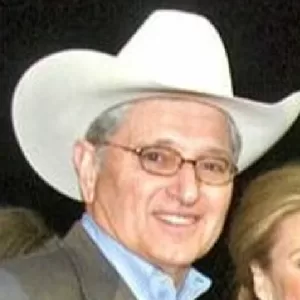
Johnny Trotter
Johnny Trotter
Out of Hereford, Texas Johnny Trotter’s impact on the racing industry can be felt throughout the state.
Trotter spent his early years trading horses in and around Clovis, NM and learned from the greats such as Pete Garnett, Bobby Lewis, Bobby Edmond and Sonny Thomason. Trotter credits One Famous Eagle with leading him into a relationship with Anne and John Marion and Karen and Glenn Blodgett, who would become some of the greatest business partners and friends that he would ever have.
Trotter also credits Dr. Charles Graham with spearheading his relationship with the American Quarter Horse Association. In 2001, at Bar G, one morning about 6 a.m., he was called to the phone. “Doc” Graham was on the other end and he told Trotter “Here’s the deal, at next year’s convention, I want to introduce you at the Texas directors meeting. In a few years, there will be a seat open on the board and we will need you to represent Texas as an AQHA director!”
Trotter served as an AQHA Director for 11 years and became president of the American Quarter Horse Association in 2014. He has served on the racing, nominations and credentials, stud book and registration committees, as well as the foundation, ranching and racing councils. His involvement in the American Quarter Horse Industry focused on racing, roping, and horses used for ranch work and breeding. He is an avid team roper and participates in numerous ropings, including the World Series of Team Roping.
In 2015, he was inducted into the Texas Cowboy Hall of Fame and in 2017 Trotter received the National Cowboy & Western Heritage Chester A. Reynolds Memorial Award.
In addition to his involvement in the horse industry, Trotter is actively involved in his local community. He has served on the West Texas A&M University Foundation as well as the Make-A-Wish Foundation, the Deaf Smith County Chamber of Commerce and the Kings Manor Methodist Retirement Home boards. He is the CEO of Livestock Investors Ltd and owns Bar G Feedyard. Trotter is also a former member of the Texas Cattle Feeders board of directors and was the 2006 recipient of the Tri-State Fair Western Heritage Award.
Just announced in April 2017, Johnny Trotter is also part of a 5-member partnership, All American Ruidoso Downs Racing, LLC, pursuing the purchase of Ruidoso Downs from R.D. Hubbard.
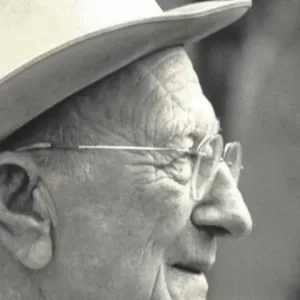
Preacher O’Quinn
Preacher O’Quinn
Few people ever get to live their dream, but Preacher was one of the lucky ones. Preacher, was born May 10, 1909 in Sugartown, Louisiana. He moved with his family to the Wharton, Texas area when he was about six years old. He had a lifelong interest in sports, and excelled in baseball, football and swimming. But, it was in horse racing that he achieved his greatest success. He was a pioneer in Quarter Horse breeding. His beautiful horses garnered the attention of many, spurring the interest in horse racing when it needed it the most. Preacher’s honesty and integrity gave horse racing the reputation it deserved in Texas. In the 1930’s after some years as a roughneck in the oil fields, he decided he would pursue his lifelong dream of having the best horses that he could afford, and this would be his absolute focus in life. He was an eternal optimist and an adventurer like no other, once swimming across the Mississippi River in New Orleans. This, and his natural competitive spirit kept him in the horse business for over sixty years. In the early 1940’s, he purchased the second horse registered in the American Quarter Horse Association, the prominent sire, Rialto. Through much study, he developed a successful horse business choosing stallions that complimented his Quarter Horse mares. These sires included King, Depth Charge, the great Three Bars, and many others. Around 1948, he purchased the fast little mare by King, O’Quinn Midget. This turned out to be the best decision he ever made, because she became the foundation of his horses for the next fifty years. He had much success with her, and every foal that she produced had her looks and speed. She produced the multi-record setting, AQHA 1953 World Champion two-year-old Colt, Super Charge, by Depth Charge. Three Bars was the perfect match with his mares. The combination of the bloodline of both King and Three Bars together was a dynamic combination. This cross produced a unique group of mares that were both beautiful and highly successful. They brought great attention to Quarter Horses and racing in Texas because few people had heard of Three Bars. These mares included Midget O’Quinn, winner of the 1964 Las Ninas Invitational and Laurita Bar, winner of the 1967 Texas Futurity. In 1962, the fastest of his Three Bars mares, Miss Bar Leo, set the mare world record, two-year-old filly record at 350 yards, two-year old-filly record at 300 yards and equaled the world record, the mare record and the filly record at 350 yards. And, she produced the 1969 All American Futurity qualifier, Go Debbie Go. Another was, Miss Cy Fair, who produced three All American Derby finalists, Azure Fair, Good Old Joe and Truck N Stuff. She also produced Roll Your Glass, the winner of the 1985 1st Consolation of the All American Futurity. Through much persistence and his humble persuasion, he sought Kentucky Thoroughbreds to better his bloodline. Convincing these farms was no easy task. One of these was Hempen, who outran the Preakness winner, Tom Rolfe. His Three Bars mare, Miss Cy Fair was the first Quarter Horse ever to be bred to Thoroughbred sire Hempen, paving the way for other Quarter Horses. Hempen Sired 452 Quarter Horse race winners with $7.3 million in Quarter race earnings. He was also the first to breed to Darby Dan Farm’s sire, Decathlon, The United States Sprint Champion, and other sires as well. By the late 1970’s, he found another Thoroughbred sire that he thought might be a good cross with his Quarter mares. He was a beautiful stallion by Noholme II, a leading North American sire. His name was Strate Stuff. He had great early speed and had defeated Nodouble and Dancer’s Image. He bought him and stood him in Texas for breeding. He dedicated his life to the horse business. Preacher had a deep love and understanding of people, and a desire to be friends with everyone. Foremost, he wanted to show others that there were honest people in the world. His horses were renowned for both speed and beauty. He was renowned for his humility. Preacher, was recognized as the Texas Racing Board’s Breeder of the Year in 1976. And, in 2001, he posthumously received the Fifty Year Breeder’s award from the American Quarter Horse Association, of which he was a lifetime member. He passed away December 5, 2000.
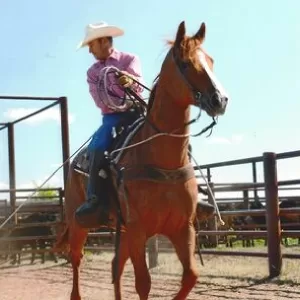
Ochoa
Ochoa
Bred in Texas by John T. L. Jones Jr. Interests Ltd., Ochoa was a $25,000 repurchase at the Ruidoso Select Yearling Sale and runs for a partnership comprised of John and Brenda Jones’ J Bar 7, Monte and Katsy Cluck and Doug and Shavon Benson.
The four-time champion has made a lasting impact on the sport, with a mere 15 career starts. Within those races, he won the Grade 1 All American Futurity and Derby and the Robert L. Boniface Los Alamitos Invitational Championship. He is the sport’s all-time leading money earner and was champion 2-year-old and 2-year-old gelding in 2011 and champion 3-year-old and 3-year-old gelding in 2012. With his August 4 win in the Mr Jet Moore Handicap (G3), he earned the prestigious title of AQHA Supreme Race Horse.
The award recognizes a racing American Quarter Horse who during his or her career earns $500,000 or more, wins two or more open Grade 1 stakes races and at least 10 races.
Ochoa was trained by Ruidoso Downs’ Racehorse Hall of Famer Sleepy Gilbreath, and in one of the most impressive performances in recent history, Ochoa drew clear to a decisive 1 ½-length victory in the $2.4 million All American Futurity (G1) on Labor Day in 2011 at Ruidoso Downs
He is the sixth horse to win the All American Futurity and the All American Derby. His race record is 11 wins, one second and one third in 15 career starts and earnings of $2,762,615.
He was inducted into the Ruidoso Downs Hall of Fame in June 2016.
In August 2016, Ochoa began training again. He was introduced to the heavy and sometimes bulky western working saddle with layers of thick leather built upon a stiff and solid tree designed to hold a thousand pounds or more of cattle at the end of a lariat. His trainer, Chris Littlefield, said Ochoa surprised him with his extreme versatility and with his ability to solve problems and apply newly-learned skills. Ochoa has returned to his home ranch now, there to continue a new career as the newest working ranch horse on the J Bar L.
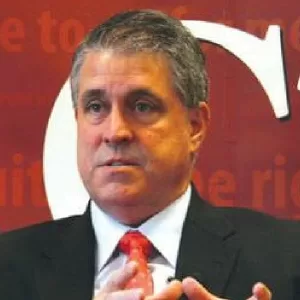
Steve Sexton
Steve Sexton
A native of Topeka, Kansas, Steve Sexton graduated from Claremont McKenna College in Claremont, Calif., with majors in economics and psychology.
He started his career in the racing industry in 1983 as a sales promotion manager at Santa Anita racetrack in California. Sexton moved around to various tracks during his career rounding out his management skills and industry knowledge. After serving at Canterbury Downs, Golden Gate Fields, Thistledown, Lone Star Park, and Arlington Park, Sexton settled in at Churchill Downs where he served as president from 2002 to 2009. Back in 1991 David Vance (as President of DeBartolo Racing) put Sexton in charge of Thistledown in Ohio. Vance said Steve Sexton was always very conscious of customer service, whether it was to the horsemen or the patron and had a reputation for working hard.
In Texas, Sexton made a big impact. In 1994, he was named assistant general manager at Lone Star Park. He loved horse racing and people and was a customer oriented manager who helped Corey Johnsen prepare for Lone Star’s grand opening in 1997.
When Lone Star opened in 1997 Sexton was named executive vice president and later promoted to general manager of the track in 2000. As Lone Star’s vice president and general manager, Sexton was instrumental in one of the most successful track launches in the modern era. Sexton was praised highly by his friends and coworkers. Corey Johnsen who worked with him at Lone Star Park and Churchill Downs was quoted as saying “Steve Sexton will be considered one of the greatest horse-racing executives in modern history”.
He joined Churchill Downs Incorporated as the president of Arlington Park in 2001 and guided the track during its preparations for the 2002 Breeders’ Cup and moved to Louisville soon after. At the Churchill Downs facility, Sexton was at the head of a significant grandstand and clubhouse renovation, as well as the 2006 Breeders’ Cup. Sexton improved the track facility and the profitability of Kentucky Derby (gr. I) week, which set attendance and wagering records under his watch. Kentucky Downs president Corey Johnsen said Sexton also did a lot of small things behind the scenes to improve the sport.
In 2005, when the Jockeys’ Guild was in disarray, failed to use racetrack contributions to buy catastrophic insurance for its members and depleted its fund to support disabled riders, Sexton got personally involved. Churchill Downs obtained $1-million in catastrophic coverage for jockeys and Sexton pushed NTRA Charities to support the Permanently Disabled Jockeys Fund that provided care to more than 50 former riders who had suffered severe injuries. He testified before Congress on the matter in November 2005.
Sexton resigned from Churchill Downs in 2009 and surfaced in Austin, Texas, where he was named president of Formula One United States, a grand prix auto track and entertainment center funded by Tavo Hellmund and Red McCombs.
In 2017, Lone Star Park announced that the Grade 3 Texas Mile Stakes race would be renamed in honor of Steve Sexton and he would also be inducted into the Lone Star Park Hall of Fame. “Anyone who knew or worked with Steve Sexton knows he was one of the most versatile, talented and dedicated racing executives of his time,” said Scott Wells, Lone Star Park’s president and general manager. “Horses and the people who work with them are the backbone of this sport; and throughout his career, Steve demonstrated a passion for both which was unsurpassed. We are proud that the Steve Sexton Mile will live on at Lone Star Park as a tribute to him and to his spirit of achievement and excellence.
The horse racing industry lost a good man and a great management professional when Steve Sexton passed away December 12th, 2016.