2007 Hall of Fame Inductees
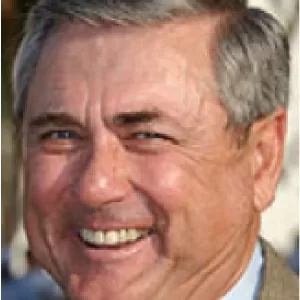
Carl Nafzger
Carl Nafzger
Prior to his training career, he spent several very successful years on the PRCA circuit and was ranked No. 3 in the world of professional bull riders in 1963. Nafzger went on to the National Finals three straight years, 1963-65.
Carl married his wife Wanda in 1968, the year he took out his trainer’s liscense. In those days Nafzger and his wife did all the work, Wanda grooming them and Carl exercised and shod them.
Nafzger is one of just a few trainers to win the Kentucky Derby twice. He did it first with Unbridled in 1990 and again in 2007 with the sensational Street Sense. At time of publication, Street Sense is prepping for the 2007 Breeder’s Cup Classic at Monmouth Park where he is expected to face Hard Spun and Curlin again. This exciting crop of three year olds already has produced some memorable moments in racing history.
In 1971, Nafzger saddled his first stakes winner when Speedy Karen won the Fiesta Handicap at Santa Fe Downs. According to Equibase, Nafzger’s first major stakes win came at Louisiana Downs in 1978 when Nalee Miss won the Myrtlewood Stakes. Since then, he has won over 140 stakes races in North America.
In 1998, a daughter of Unbridled became his second champion. Banshee Breeze won the Coaching Club of America Oaks, the Alabama and the Spinster.
He credits legendary horseman John Nerud for giving him the push he needed to become a successful trainer. “John Nerud did three great things for me,” said Nafzger. “He put good horses in my barn. He gave mecinfidence to stick to my own theories and he kept owners off my back until I could prove I could train horses.”
Between 1973 and August 29, 2007, Nafzger is credited with 1,065 wins and earnings of $49,518,638. Carl is also a talented author. He wrote the book Traits of a winner: The Formula for Developing Throroughbred Racehorses.
Preston Carter, Jr.
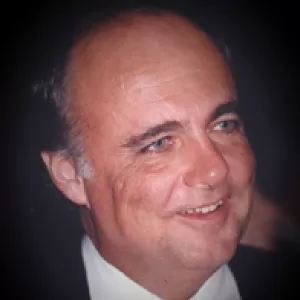
Preston Carter, Jr.
While owning both Thoroughbreds and Quarter Horses, Preston raced many stakes winners, with the most notable being the $1.16 Million earner On A High. In 1983, the Philips, Rheudasil and Carter owned On A High earned $1 million for winning the prestigious $2 Million All American Futurity as Ruidoso Downs. The next year at Manor Downs, On A High set a 440-yeard Texas record while winning the Texas Quarter Horse Association Derby.
On A High continues to stand at stud and is the No. 11(2014) all time leading living sire of American Quarter Horse money earners. A trust for Preston’s children remains involved in the ownership of On A High.
Other horses that Preston owned include the stakes winner Sixarun, a $291,000 earner and Texas Champion who went on to sire the earners of nearly $8 Million. Now pensioned, Sixarun is the No. 14 all-time leading living sire of American Quarter Horse money earners. Sixarun was bought by Texas Horseracing Hall of Fame member Clarence Scharbauer, Jr.
Formerly president and chairman of the board of the Texas Horse Racing Association, Preston was a life member of the American Quarter Horse Association, the Texas Thoroughbred Association and the Texas Quarter Horse Association. He was an honorary vice president of the Texas Quarter horse Association.
Preston was one of the key figures in the passage of pari-mutuel legislation in Texas in the 1980s. After the successful passage of pari-mutuel wagering in 1987, Preston embarked upon his dream of building a racetrack in North Texas. Preston formed a partnership of Thoroughbred and Quarter Horse owners known as Lone Star Jockey Club and in 1992 was awarded the license to build Lone Star Park. Carter sold an interest in the largest and most successful track in Texas just before the track opened in 1997.
Historic Texas Racetracks
Historic Texas Racetracks
The first race track in Texas was built near the town of San Saba in the hill country before the Civil War. Quarter Horse racing was particularly popular at the time as it remains today throughout the Texas hill country. A race course was built in Brownwood in 1880; Hyde Park was established in 1850 in Austin; and Dallas had fair park in 1886.
Gambling at Texas tracks was commonplace, but it wasn’t until 1905 that it was sanctioned by the legislature “on the day and within the enclosure where such races are run”. No regulation accompanied this legislation and in 1909 the legislature voted to prohibit race track gambling all together. In 1933 legislation allowing pari-mutuel betting was passed and four major tracks were built – Arlington Downs between Dallas and Fort Worth, Epsom Downs in Houston, Alamo Downs in San Antonio, and Dallas State Fair Park. The legislature repealed the race track gambling law in 1937.
In the 1970’s, the AQHA recognized race tracks in Lubbock, Colleyville, Columbus, Midland, Sonora, Del Rio, Goliad, and Uvalde. “Brush tracks” were operated in Brady, Fredericksburg, New Braunfels, Boerne, Hilltop Lakes, Laredo, Seguin, San Angelo, Junction, Wichita Falls, Clear Park, and Bandera
Texas horse racing today exists because the fair associations and brush tracks kept the flame burning during the dark years.
Thank you to Tommy Azopardi, Dr. Charles Graham, Tommy Oliphant, and Wanda O’Banan for providing information on the historical racetracks of Texas.